
Training Zones Made Simple: RPE, Heart Rate, Power, and Pace Without the Confusion for Beginners

Training zones can sound complicated.
Zone 2. Threshold. Tempo. Sweet spot. Power. Pace. Heart rate. RPE.
Before long, a simple workout can start to feel like you need a science degree, three watches, a lab test, and a small emotional support snail.
The good news?
Training zones do not need to be complicated.
At Rapid Snail Racing, we like to keep things useful, practical, and athlete-friendly. Zones are simply a way to describe how hard you are working so you can train with purpose instead of guessing every session.
Or worse, accidentally turning every workout into a race against yourself, your watch, the person on the treadmill beside you, and your questionable life choices.
Speed Optional. Fitness Mandatory.
Let’s make training zones simple.

What Are Training Zones?
Training zones are effort ranges.
They help you understand whether a workout should feel easy, steady, hard, or very hard.
They can be based on different tools, including:
RPE, or Rate of Perceived Exertion
Heart rate
Power
Pace
Each tool gives you a slightly different way to measure effort, but they are all trying to answer the same question:
How hard am I working right now?
That answer matters because not every workout is supposed to feel the same.
Some sessions are meant to build endurance.Some are meant to improve speed.Some are meant to help you recover.Some are meant to make you question your relationship with hill repeats.
The magic is not in crushing every session.
The magic is in doing the right effort on the right day.
Why Training Zones Matter
Training zones help you avoid two of the most common endurance training mistakes:
Going too hard on easy days.
Not going hard enough when the workout actually calls for quality.
Most beginner and developing athletes do not need more suffering. They need better control.
Zones help you:
Build endurance
Improve pacing
Manage fatigue
Recover properly
Reduce injury risk
Understand workout intent
Train consistently week after week
Training is not about proving how hard you can go every single day.
Training is about stacking smart, repeatable work over time.
The snail understands this.The snail may be chaotic, but the snail respects consistency.
RPE: The Best Place to Start
RPE stands for Rate of Perceived Exertion.
In plain English, it means how hard the workout feels.
This is based on your breathing, effort, body feedback, and ability to talk. You do not need a fancy watch to use RPE, which makes it one of the most useful tools for any athlete.
Even if you use heart rate, power, or pace, you should still understand RPE.
Technology can fail.
Zones can be wrong.
GPS can have a dramatic moment.
Your body still knows what effort feels like.
Simple RPE Scale
RPE | Effort Level | What It Feels Like |
1–2 | Very Easy | Gentle movement, full conversation possible |
3–4 | Easy | Comfortable, controlled, can talk in full sentences |
5–6 | Moderate | Steady effort, talking becomes shorter |
7 | Hard | Focused effort, only short phrases possible |
8 | Very Hard | Breathing heavy, difficult to hold for long |
9 | Near Max | Very uncomfortable, only sustainable briefly |
10 | Max Effort | All-out, not repeatable for long |
For most beginner athletes, RPE is the best place to start because it teaches you how training should feel.
And yes, most people’s easy pace is probably easier than they think.
Sorry.The snail has spoken.
Heart Rate Basics
Heart rate measures how hard your cardiovascular system is working.
It is useful for easy runs, long rides, endurance sessions, and making sure you are not turning every workout into a secret threshold test.
Heart rate is especially helpful for keeping easy days easy.
But heart rate is not perfect.
Your heart rate can be affected by:
Heat
Humidity
Sleep
Stress
Caffeine
Dehydration
Illness
Fatigue
Hills
Life chaos, also known as being a human
This means your heart rate may be higher than usual even if your pace or power is lower.
That does not always mean you are losing fitness.
It may simply mean your body is dealing with more stress that day.
Simple Heart Rate Zone Idea
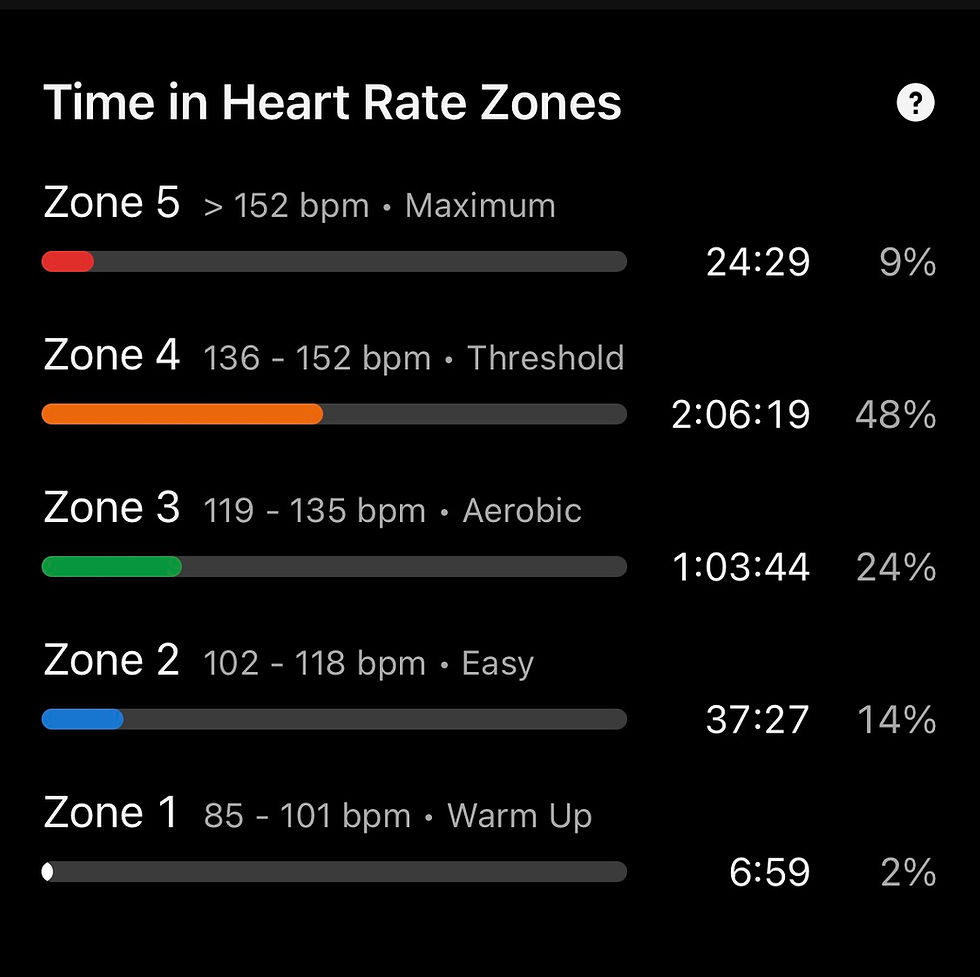
Most heart rate systems are built around five zones:
Zone | Effort | Purpose |
Zone 1 | Very Easy | Recovery |
Zone 2 | Easy | Aerobic endurance |
Zone 3 | Moderate | Steady endurance |
Zone 4 | Hard | Threshold work |
Zone 5 | Very Hard | Short intervals and high-intensity work |
A lot of endurance training, especially for beginner and intermediate athletes, should happen in the easier zones.
That means relaxed breathing, controlled movement, and finishing the session feeling like you could have done more.
That is not weakness.
That is endurance training.
Power Basics
Power is most commonly used in cycling, although some runners also use running power.
Power measures output. It tells you how much work you are producing right now.
Unlike heart rate, power responds immediately. If you push harder on the pedals, your power goes up right away.
This makes power very useful for structured workouts, indoor rides, race pacing, and intervals.
Why Power Is Useful
Power can help you:
Control effort
Pace workouts more accurately
Avoid starting too hard
Measure progress over time
Complete indoor training sessions with more precision
The most common power term you will hear is FTP, which stands for Functional Threshold Power.
FTP is an estimate of the highest power you can sustain for around an hour. Your power zones are usually built from this number.
But here is the important part:
You do not need to obsess over every watt.
Power is a guide. It is not a judge in a tiny black robe living inside your bike computer.
If the workout calls for 150 watts and you ride 147, the world does not end.
The better question is:
Did you complete the right type of effort?
Pace Basics
Pace is how fast you are moving.
For running, this is usually shown as minutes per kilometre or minutes per mile.
Pace is easy to understand, which makes it popular. But pace can also be misleading.
A 6:00/km pace on a flat road is not the same as a 6:00/km pace uphill, into the wind, on tired legs, in summer heat, while questioning every snack decision you made that day.
Things That Affect Pace
Pace can change based on:
Hills
Wind
Heat
Trail surface
Fatigue
Elevation
Treadmill settings
Recovery status
Pace is very useful for track workouts, flat road intervals, race pacing, and comparing progress on similar routes.
It is less useful when the terrain, weather, or conditions are constantly changing.
That does not mean pace is bad.
It just means pace needs context.
Some days, the best thing you can do is ignore the pace, focus on effort, and let the workout be what it needs to be.
Why Easy Days Need to Be Easy
This might be the most important part of the whole article.
Easy days need to be easy.
Not medium.
Not “kind of spicy.
”Not “I felt good so I accidentally raced my recovery run.”
Easy.
Easy training builds your aerobic engine without adding too much stress. It allows you to recover between harder workouts and keep training consistently.
If every workout becomes medium-hard, you may feel productive for a while, but eventually your body starts sending invoices.
Those invoices may arrive as:
Heavy legs
Poor sleep
Low motivation
Stalled progress
More soreness
Higher injury risk
Feeling flat during key workouts
The problem is not usually that athletes cannot work hard.
The problem is that they do not go easy enough when the plan says easy.
What Easy Should Feel Like
Easy training should feel:
Controlled
Conversational
Relaxed
Sustainable
Almost too easy at the start
You should finish most easy sessions feeling like you could keep going.
That does not mean the workout was useless.
That means you did it correctly.
Here is the RSR rule:
Hard days can be hard because easy days were actually easy.
Easy days build the engine.Hard days sharpen the engine.Recovery lets the engine actually improve.
How to Complete a Workout If You Do Not Know Your Zones
You do not need perfect zones to start training.
If you do not know your heart rate, power, or pace zones, use RPE and the talk test.
This is simple, effective, and much better than guessing wildly while your watch throws numbers at you.
If the Workout Says Easy
Use RPE 3–4.
You should be able to speak in full sentences. Breathing should feel controlled. You should not feel like you are chasing speed.
If you are unsure, slow down.
Yes, even more.
If the Workout Says Steady
Use RPE 5–6.
You are working, but still in control. You can speak in short sentences. This should not feel like a race.
If the Workout Says Tempo or Threshold
Use RPE 6–7.
This is comfortably hard. You can hold the effort, but you need to focus. Talking is limited to short phrases.
You should not be sprinting.
Threshold is controlled discomfort, not a full send into the pain cave with no snacks.
If the Workout Says Intervals
Use RPE 7–9, depending on the workout.
Shorter intervals may be closer to RPE 8–9. Longer intervals may be closer to RPE 7–8.
The goal is controlled repeatability.
The last interval should look like it belongs in the same family as the first one.
If the Workout Says Recovery
Use RPE 1–3.
Very easy.
No ego.
No chasing pace.
No surprise personal bests.
Recovery means recovery.
The Talk Test
When technology is confusing, come back to breathing.
Your breathing tells you a lot.
Effort | Talk Test |
Very Easy | Full conversation is easy |
Easy | Can speak in full sentences |
Moderate | Can speak in short sentences |
Hard | Can only say a few words |
Very Hard | Talking is not happening |
If your easy workout does not pass the talk test, it is probably not easy.
The watch may disagree.
The watch does not have lungs.
Simple Zone Translation Guide
Here is a quick way to translate common workout language into effort:
Workout Says | Use This Effort |
Easy | RPE 3–4 |
Endurance | RPE 3–5 |
Steady | RPE 5–6 |
Tempo | RPE 6–7 |
Threshold | RPE 7 |
Intervals | RPE 7–9 |
Sprint / Max | RPE 9–10 |
Recovery | RPE 1–3 |
This is not perfect, but it is useful.
And useful beats complicated.
Common Beginner Mistakes
Mistake 1: Easy Days Are Too Hard
This is the big one.
If your easy workouts keep drifting into moderate effort, your body never gets the lower-stress aerobic work it needs.
Slow down.
Walk if needed.
Use easier gears.
Let the snail do snail things.
Mistake 2: Chasing Pace Every Session
Pace is not the goal of every workout.
Some days are about endurance.Some days are about recovery.Some days are about technique.Some days are about learning control.
Not every workout needs to be fast to be successful.
Mistake 3: Ignoring Heat and Fatigue
Hot days make training harder.
Poor sleep makes training harder.
Stress makes training harder.
If your heart rate is high and your effort feels harder than usual, adjust the workout.
Training is not about proving you can suffer through every bad day.
Mistake 4: Treating Zones Like Exact Walls
Zones are guides, not prison fences.
A few seconds above or below a target is not a disaster.
The goal is to complete the overall intent of the workout.
How to Know You Are Doing It Right
You are probably on the right track if:
Easy days feel controlled
Hard days feel purposeful
You are recovering between sessions
You are not racing every workout
Your long sessions are becoming more manageable
You understand the goal of each workout
You finish most workouts feeling like you trained, not like you survived a minor weather event
Training zones are not about making training complicated.
They are about making training smarter.
Final RSR Takeaway
Training zones help you understand effort.
But the most important zone is the one that lets you train consistently, recover properly, and show up ready for the next session.
Use RPE.
Use heart rate.
Use power.
Use pace.
Use common sense.
And remember:
Easy days easy. Hard days controlled. Fitness mandatory. Chaos optional, but likely.
Need Help Setting Your Zones?
Confused by heart rate, power, pace, or TrainingPeaks targets?
Rapid Snail Racing can help you set your zones, understand your workouts, and train with more confidence.
Need help setting zones? Book a consult.


Comments